Hurricane water damage cleanup: a neighborhood guide for Parrot Cove
Storm surge, roof leaks, and saltwater intrusion hit Parrot Cove hard. Here's how hurricane water damage cleanup actually works block by block.
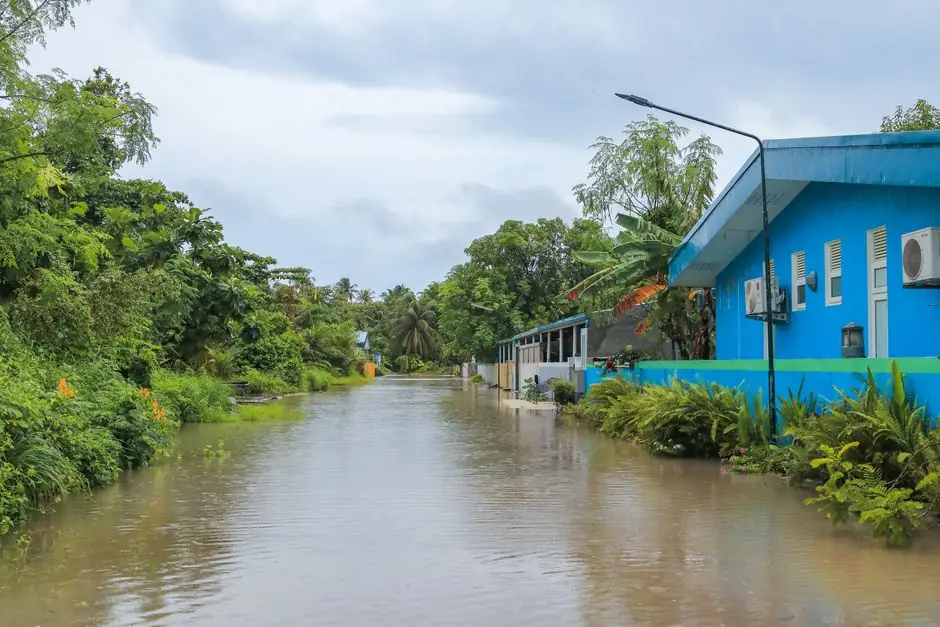
Hurricane water damage cleanup in Parrot Cove is not the same job as it is two miles inland. The neighborhood sits on a coastal ridge between the Lake Worth Lagoon and the Atlantic, and when a storm pushes water over the seawall, that water arrives fast, salty, and mixed with whatever was on the street. The cleanup has to account for all three.
This guide walks through what we actually do when we roll into Parrot Cove after a named storm - the first 24 hours, the drying sequence, the salt problem, real 2026 pricing, and the mistakes that turn a two-day job into a two-month insurance fight.
Why Parrot Cove floods differently than the rest of Lake Worth Beach
Parrot Cove's elevation profile is the reason a Category 1 storm can do Category 3 damage to a house on the 100 block of a street like South Lakeside or North Ocean Breeze. Much of the neighborhood sits between 6 and 10 feet above sea level, with the lowest blocks closer to 4 feet. Add a 4-to-6-foot storm surge on top of a high tide and the water has nowhere to go but into your crawl space, your garage, and your first floor.
The housing stock makes it worse. Most Parrot Cove homes were built between the 1920s and the 1960s - concrete block with original terrazzo or hardwood floors, jalousie windows, and pier-and-beam crawl spaces that were never designed to sit in standing water. That construction is charming until it's wet. Concrete block wicks moisture up the wall cavity. Terrazzo traps water underneath. And a crawl space that holds 3 inches of saltwater for 48 hours will grow mold on the joists within four days.
We also see a specific pattern with the older cast-iron and galvanized drain lines in the neighborhood. When the municipal system backs up during a storm, that pressure finds the weakest joint in your house - usually the laundry drain or the guest bathroom toilet. That's why so many Parrot Cove hurricane claims include an interior sewage component, not just storm surge.
The first 24 hours after the storm passes
The first 24 hours after a hurricane decide whether your Parrot Cove home is a drying job or a rebuild. Here's the order we recommend, whether you call us or not.
- Document before you touch anything. Photograph the water line on the walls, the depth in each room, and every piece of damaged furniture. Insurance adjusters want the water line visible in the photos.
- Kill the power to any flooded area. If you can't reach the breaker safely, don't. Wait for us or for FPL.
- Get the standing water out. A wet/dry shop vac moves about 10 gallons before you have to empty it. That's fine for a bathroom. It's useless for 2 inches across 1,200 square feet.
- Pull up wet carpet and padding. Carpet padding is a sponge. If it stays down more than 24 hours, it's trash and it's feeding mold.
- Start air movement. Every box fan you own, pointed across the wet floor, not at the wall. Open interior doors. If the power is out, this step waits.
What you should not do in the first 24 hours: run your central A/C if the outdoor unit was submerged, plug in dehumidifiers on a flooded circuit, or tear out drywall above the water line. We've seen homeowners turn a $4,000 drying job into a $22,000 mold remediation by pulling the wrong wall at the wrong time.
If the water is still rising or your home has more than an inch across multiple rooms, call us for Emergency Water Damage Restoration in Lake Worth Beach. We run storm crews out of our Lake Worth Beach shop and can usually have a truck at a Parrot Cove address within 60 to 90 minutes of the all-clear.
What hurricane water damage cleanup actually involves
Hurricane water damage cleanup is the process of removing storm-introduced water, drying the structure to a verified moisture baseline, and treating every surface the water touched so mold and bacteria don't return. It's not a shop-vac and a fan. Here's the sequence we run on a typical Parrot Cove house.
Step 1: Water extraction
We use truck-mounted extraction units that pull 15 to 25 gallons per minute, plus weighted extraction heads for carpet and a separate pump rig for crawl spaces. A 1,500-square-foot home with 2 inches of standing water is usually dry to the touch in 3 to 5 hours. That's Standing Water Removal in Lake Worth Beach at scale - not the bucket-and-mop version.
Step 2: Contamination assessment
Storm surge is Category 3 water under the IICRC S500 standard, which means it's grossly contaminated. Anything porous it touched - drywall below the water line, insulation, carpet, particleboard furniture - comes out. Non-porous surfaces get treated with an antimicrobial and, where needed, a disinfectant rated for sewage and flood water.
Step 3: Structural drying
This is where the job is won or lost. We set commercial LGR dehumidifiers and high-velocity air movers based on a calculated drying plan, not a guess. For a typical 1,200-square-foot first floor, that's 4 to 6 air movers and 2 to 3 LGRs running 24/7 for 3 to 5 days. We monitor with pin-type and non-invasive moisture meters, plus thermal imaging, and we log readings daily. When the readings match a dry standard from an unaffected room, we pull the equipment.
Step 4: Clearance and rebuild
Once the structure is dry, we document it with photos and meter readings for your adjuster. Rebuild - new drywall, baseboards, flooring, paint - is a separate phase, and we can coordinate it or hand it to your contractor.
Saltwater vs. freshwater: why it matters for your Parrot Cove home
Saltwater intrusion changes the cleanup math in Parrot Cove, and most out-of-town crews miss it. Brackish water corrodes the metal components in your home faster than freshwater does - the nails in your baseboards, the electrical boxes in the lower wall, the HVAC plenum, the steel door frames. We've pulled baseboards in Parrot Cove homes three weeks after a storm and found the nails already rusted through.
Two practical consequences. First, any electrical device that sat in saltwater - outlets, switches, the bottom of your panel, your water heater's control board - gets replaced, not dried. Second, metal surfaces that stay get treated with a corrosion inhibitor after drying, not just an antimicrobial. If a crew tells you saltwater and rainwater are the same job, they're going to leave rust in your walls.
For homeowners dealing with the interior side of this - the plumbing that failed during the storm or the appliance that leaked while you were evacuated - we handle Residential Water Damage Restoration in Lake Worth Beach with the same salt-aware protocol.
What does hurricane water damage cleanup cost in Lake Worth Beach?
Typical 2026 pricing for hurricane water damage cleanup in Lake Worth Beach runs $3,200 to $7,500 for a 1,200-to-1,800-square-foot home with 1 to 3 inches of storm water on the first floor. That range covers extraction, antimicrobial treatment, equipment rental, daily monitoring, and a written drying log for your insurance claim.
What pushes a job above that range:
- Crawl space flooding - add $1,200 to $2,800 for pumping, drying, and joist treatment.
- Sewage backup mixed with storm water - add $1,500 to $4,000 for Category 3 remediation, including removal of contaminated materials.
- Saltwater intrusion into the wall cavity - add $800 to $2,000 for corrosion treatment and lower-wall replacement.
- Mold already visible - add $2,500 to $8,000 for remediation, which is a different scope and usually a different crew.
Most hurricane claims in Florida are covered under the windstorm or flood portion of your policy, depending on how the water entered. Water that came in through a breached roof or a broken window is typically windstorm. Water that rose from the ground is flood, which is a separate NFIP or private flood policy. We document both pathways in our reports so your adjuster can code the claim correctly the first time.
Common mistakes we see after every storm
The same five mistakes show up in Parrot Cove after every named storm, and each one adds days or thousands of dollars to the cleanup.
- Waiting for the insurance adjuster before starting mitigation. Your policy requires you to prevent further damage. Waiting three days for an adjuster while mold grows is the fastest way to a denied claim.
- Running the A/C to "dry things out." If the outdoor unit was submerged, you'll burn out the compressor. If it wasn't, you'll spread mold spores through the whole house.
- Pulling out wet drywall but leaving the insulation. The paper facing on insulation is mold food. If the drywall is out, the insulation behind it goes too.
- Drying without a meter. "It feels dry" is not dry. Wood framing at 19% moisture content feels dry to the hand and grows mold at 16%.
- Throwing away the wet stuff before photographing it. Your adjuster needs to see the couch, the rug, the electronics - in place, with the water line visible.
When to call a professional
Call a professional when the water covered more than one room, when it came from outside the house, or when it sat for more than 24 hours. Those three conditions cover about 90% of the Parrot Cove homes we work on after a storm. A single wet bathroom from a window leak is a homeowner job. Two inches across the living room, dining room, and hallway is not.
Our team at Lake Worth Beach Water Damage lives and works in this city. We know which Parrot Cove blocks flood first, which crawl spaces hold water, and which 1940s terrazzo floors need a slower drying curve than the newer builds. When we finish, you get a dry house, a documented moisture log, and photos your adjuster can actually use.
Frequently Asked Questions
How long does hurricane water damage cleanup take in Parrot Cove?
Extraction takes 3 to 6 hours. Structural drying runs 3 to 5 days for a typical first floor, and up to 7 days if the crawl space flooded or the walls are original 1940s concrete block. Rebuild is a separate timeline.
Does homeowners insurance cover hurricane water damage in Lake Worth Beach?
Wind-driven rain entering through a damaged roof or window is usually covered by your windstorm policy. Ground-up storm surge is flood, which requires a separate NFIP or private flood policy. We document both so your adjuster can code the claim correctly.
Can I just dry my Parrot Cove house with fans and a dehumidifier from the hardware store?
For a small, clean, freshwater spill under 24 hours old, sometimes. For hurricane water - which is contaminated and often salty - a consumer dehumidifier pulls about 30 pints a day. A commercial LGR pulls 130 pints. You'll never catch up.
How do I know if my crawl space flooded during the storm?
Look for a water line on the foundation piers, soft or sagging floors near the center of the house, and a musty smell in the lowest rooms. If you're not sure, we check it with a moisture meter and a borescope at no charge on a storm call.
What should I do while I wait for the cleanup crew?
Photograph everything, kill power to flooded areas if it's safe, pull up wet carpet and padding, and get air moving. Don't run the A/C, don't tear out drywall above the water line, and don't throw away damaged items before they're documented.
Get help with Water Damage Restoration in Lake Worth Beach
If your Parrot Cove home took on water during the last storm, we can be there today. We handle Water Damage Restoration across Lake Worth Beach - extraction, drying, documentation, and coordination with your adjuster.
Call (561) 760-4158 and tell us your cross streets. We'll give you a straight answer on what the job looks like and what it costs before we start.